
And Yet
What the body does at forty-two degrees

I woke to the scrape of the plow and the unmistakable brightness that means the world has been covered in something clean and indifferent.
I knew the storm was coming. The forecast had been sitting there all along, the smug cartoon snowflake parked squarely on the tailend of the weekend. They issued warnings. News alerts blasted. I had checked the weather enough to memorize it. I am not new to this climate. New England does not reward optimism in February.
And yet.
I went outside without a coat last week.
Not because I’d lost my mind (or not entirely) but because it was forty-two degrees and my body made a decision before my brain had any say in the matter. The door opened. The air hit my face. I breathed in a way I haven’t breathed since autumn, like there was suddenly more air available, like the cold had been rationing it all winter. Something in me—older than weather apps, older than knowing better—exhaled.
The snow hadn’t pulled back at all. There was no exposed soil, no reassuring strip of dark earth to point to and say see, something is happening. The beds were still mere suggestions. The ground has been locked solid since early December—a continuous sheet of white and then gray and then white again. If there is soil under there, I haven’t seen it in months.
Still, the air was different. The sun came in at a slightly different angle—not warmer, exactly, but less severe. Less accusatory than January light. I turned my face toward it the way you turn toward someone who has just said your name in a crowded room.
The top layer of snow cracked and my boots sank straight down. The chicken water thawed along the rim and began to drip. The yard smelled wet and faintly metallic, the way snow smells when it’s beginning to lose its grip.
There was no visible evidence of spring.
I felt want. It arrived before I had a chance to be more specific about what I wanted. I wanted to put my hands in dirt. I wanted to dig something up to see if it had survived. I wanted to stand at the edge of the yard and make plans for beds and trellises that probably won’t work exactly the way I imagine, which is fine, because the plans aren’t the point. It was the forward lean of it, the way it pulls me out of the small, shut-down life I’ve been living inside since the temperature dropped and the light left and I started going to bed at eight-thirty. Sleeping is its own form of waiting.
All winter I’ve been slow. Muted. Moving through the days in that way where everything feels effortful and gray. I keep telling myself it will pass because it always does, but some part of me has stopped believing it. And then one morning the temperature climbs above forty and the body just remembers. It remembers what it’s like to want. To lean into the future rather than simply endure it. To feel, somewhere just below the sternum, that kind of aliveness that’s really just desire with no clear direction yet.
Grief rearranged my relationship to reaching. I didn’t stop wanting exactly—I just stopped trusting the wanting. I had wanted things before and the world hadn’t held what I loved. Desire felt dangerous. Bare-armed in weather I couldn’t predict. I learned to want in a minor key.
But at forty-two degrees, my nervous system refused to honor the agreement. My shoulders dropped without permission. My lungs opened wider than I intended. My hands ached to touch something not yet ready to be touched. I wanted things. I wanted the sensation of leaning toward something instead of bracing against it. The simple fact of being oriented toward warmth again.
Daisy would have been seven this spring, and seven feels older than I can comfortably picture. I try to imagine her at that age and my mind scrambles, borrowing outlines of other children and pressing them into her shape. A month before she was born, the crocuses pushed through a crust of snow in March. I remember standing in McCarren Park, pregnant as hell, while the ground remained frozen beneath me. The light had this same sideways quality—nothing settled, everything in-between.
Last week, I felt something shift that I hadn’t authorized. It was heat moving through a body that had gotten used to cold.
This week I’m starting seeds. Not because the yard is ready—it isn’t. The ground is still locked under that sheet of old snow, with about 6 inches of fresh snow on top. But the calendar is moving whether the soil is visible or not, and certain seeds don’t wait for the ground to look inviting.
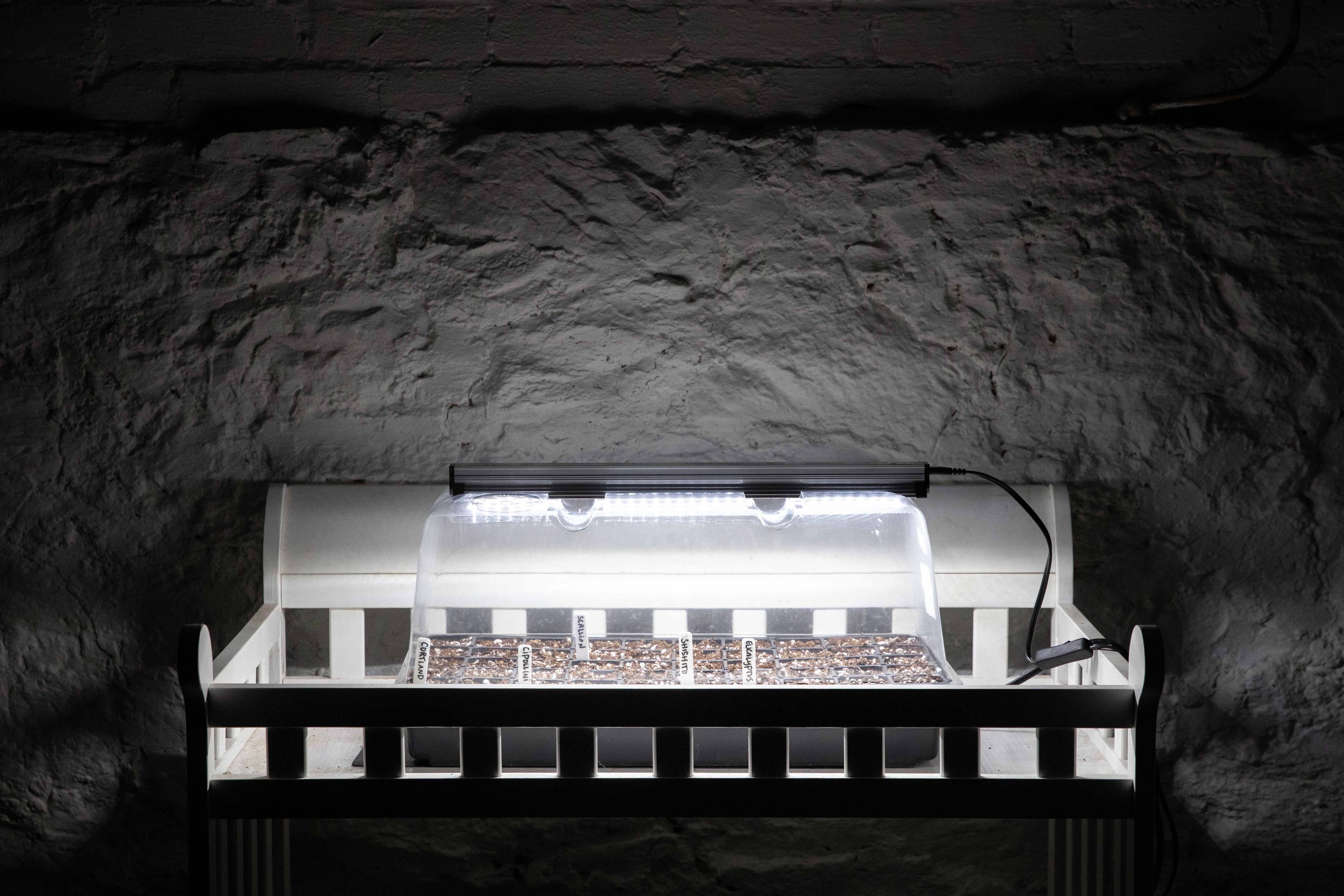
I’ve laid out the trays in the basement and filled them with seed starting mix that smells like damp wood and something faintly synthetic, like forest translated through a factory. I plugged in the heat mats. I pressed seeds into the soil under artificial grow lights while outside the plow made another pass down the road.
Now the yard is buried even more, smooth and silent, reduced yet again to contours under white. February is fully back in charge—and yet the leaning happened. The warmth moved through me. Snow can cover the ground without undoing what passed through my body.
The yard is still under a foot of snow, but downstairs the lights are already working.
🪱 COMPOST FOR THE SOUL
In Vietnamese, the word for missing someone and remembering them is the same:
nhớ.
—Ocean Vuong
🐓 BACKYARD DISPATCH
The Unbearable Lightness of Beaking
Two days after Yolko Ono died, Feather Locklear stopped crowing.
This is a rooster who has crowed at wind, at plywood, at his own reflection in the heated waterer. He once crowed because I sneezed weird. Silence, from him, is not a neutral event.
Yesterday I walked into the run bracing for the usual sonic violence and instead found him standing in the coop doorway staring into the snow-white abyss. The silence felt like a trap. I dumped the kitchen scraps anyway.
The hens stepped around his body without ceremony and marched out to eat our garbage. Hen Affleck brushed his wing like she was squeezing past a man in a grocery aisle. Benechick Cumberbatch avoided eye contact. Eggward Norton slipped by unnoticed, which is her gift.
By mid-morning, Feather began rearranging straw and shit with unnecessary intensity. Not nesting. Editing. Scratch, stare, relocate. The energy of someone reorganizing furniture after a breakup.
Yolko was, for lack of a better term, his girlfriend. Or his nemesis. Or both. They had chemistry—the kind that sparks when two extension cords are dragged through a dirty puddle. He pursued. She rebuffed. He persisted. She limped away with dignity. That dynamic ran the yard. It kept him occupied. It kept us all entertained.
Now she is gone, and his crowing has decreased by what I estimate to be 37 percent—just enough to suggest instability.
Once Feather decided the straw and shit situation was handled, he pivoted toward the doorway and stopped.
There, leaning against the coop—
the snow shovel.
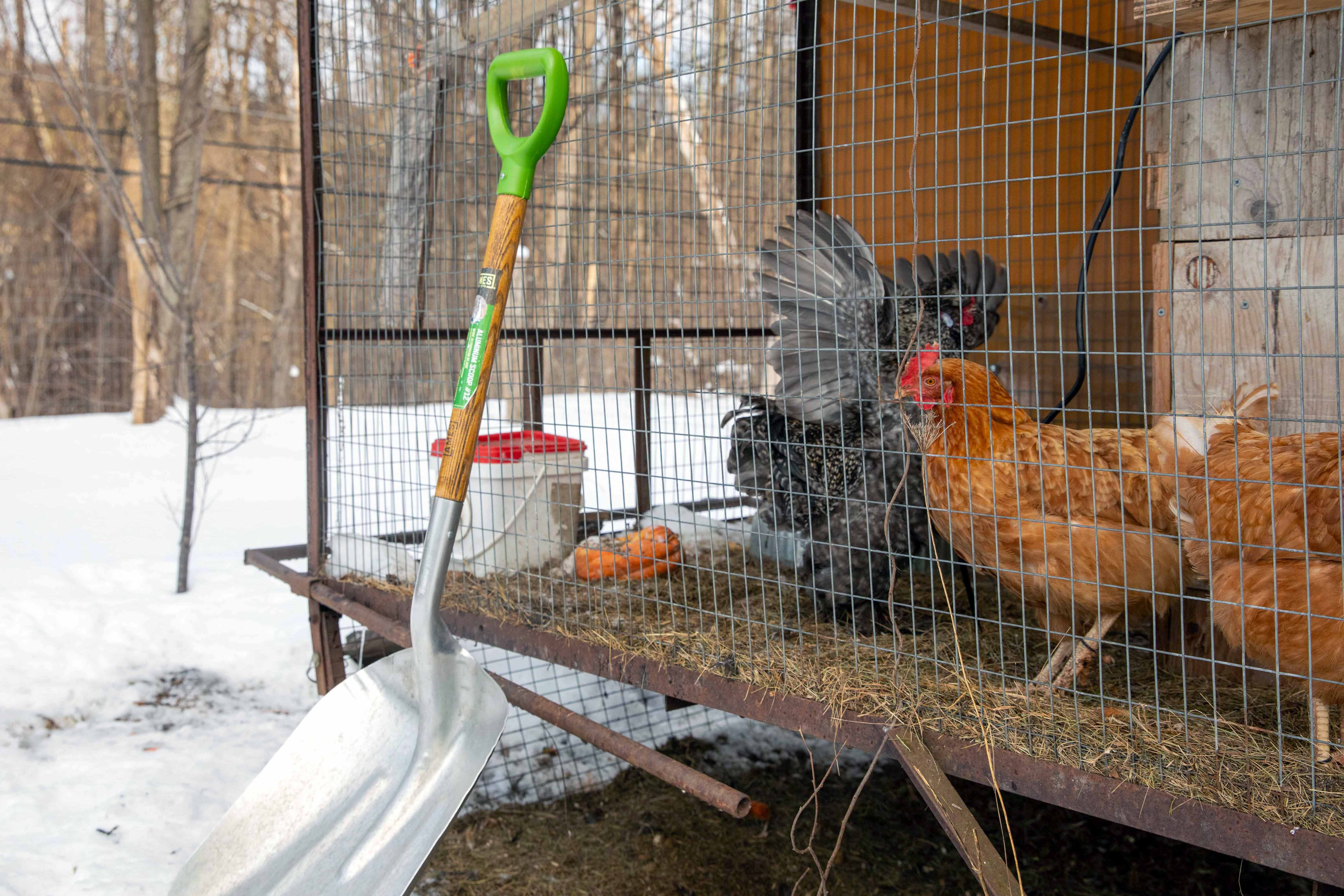
Green. Upright. Radiating neutrality, which in this yard counts as aggression.
Feather froze, tilted his head, and squared up.
“No,” I said immediately. “Please don’t start.”
He sprinted and launched himself feet-first into the blade. The metallic thunk echoed across the yard. He ricocheted backward, stunned but committed.
The shovel did nothing. The hens leaned in.
He attacked again—smaller this time. Tactical. Peck. Flap. Wild snow kick. The shovel remained upright and unbothered. He circled once and delivered one final, unnecessary kick.
The shovel wobbled. The hens gasped—not audibly, but spiritually.
It did not fall. It simply stood there.
(Again: shovel.)
And then, in a move that will be studied for generations, Hen Affleck stepped forward and began pecking at the snow gathered around the blade. Benechick joined her. Eggward, as always, seemed only loosely affiliated with reality.
Within thirty seconds, the shovel had been absorbed into the republic. Feather stood off to the side, panting, having accidentally installed a new alpha.
He looked at the shovel. He looked at the hens. He looked at me. He crowed once, and it sounded like a question.
The hens continued pecking around the shovel like it had always been there.
By the next morning, the crowing was back—not for Yolko, not for the shovel, but unfortunately at the shovel.
Winter ongoing. The shovel remains undefeated. I remain complicit.
🌱 SOW WHAT NOW?
Sow Much For Winter
The yard is under a foot of snow, which means it’s time to begin manufacturing spring in a room with questionable insulation.
Welcome to Seed Starting: The Annual Indoor Rebellion.
Unfortunately, as of this publishing, some peppers, onions, and eggplant are still at the USPS distribution center in Springfield, which feels narratively correct. I started what I had.
Step 1: Convert a Surface Into a Stage
Clear a table, a porch, or a shelving system with a weird stain that was supposed to be for neatly storing laundry things in your basement. Lay out the trays with more seriousness than the situation technically requires. Feel powerful. Feel organized.
Step 2: Open the Bag of Soil You Already Bought
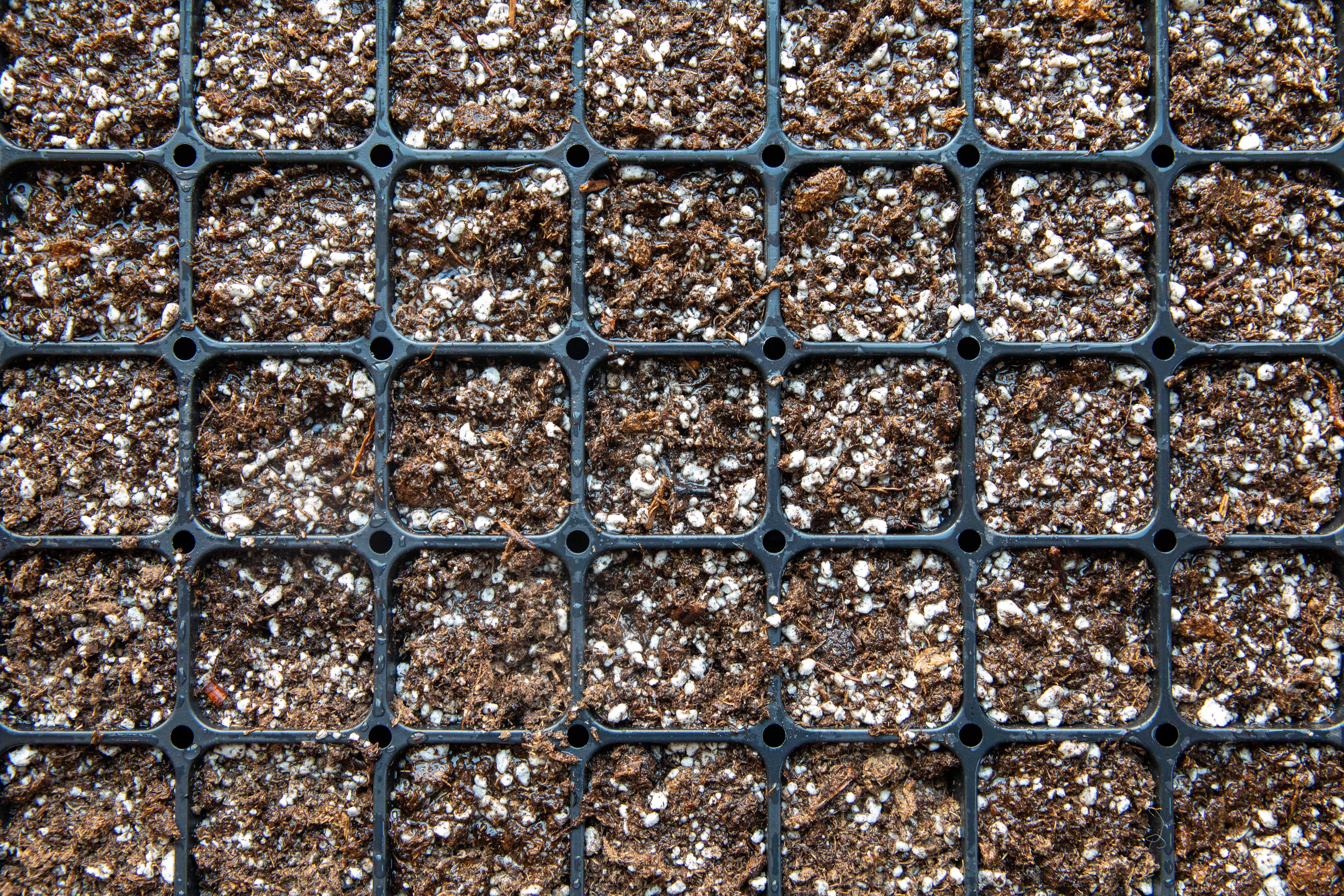
I could make my own seed starting mix, but instead I use FoxFarm “Light Warrior” because I have absolutely no desire to engineer dirt in my house in February.
Fill the cells with soil. Tap them lightly on the table like you’re calling a very dusty meeting to order.
Pre-moisten. Fresh seed mix is often hydrophobic, which is a polite way of saying it acts like it has never met water and plans to keep it that way. You will pour water on it and it will bead up like, “No, thank you.” This is normal.
Add water slowly. Use your fingers. Break up dry clumps. Hunt down stubborn pockets. It will feel wrong. Persist.
Stop when it feels like a wrung-out sponge: damp, cohesive, not dripping. Not soup. We are not making soup.
P.S. Resist the urge to eat the soil. It has the texture of an expensive crumb topping. Stay strong.
Step 3: Label Everything Like a Person Who Respects Their Future Self
Write it down. Use real labels. Use fade-proof markers. You will not remember that the left row is eggplant and the right row is non-eggplant.
You will not.
Step 4: Pre-Warm the Delusion
Plug in the heat mats before you sow. Let the soil sit on gentle warmth for a bit, like it’s considering its future.
You go do the same.
Step 5: Meet the Ensemble
Cortland onion: Dependable. Not flashy. Anchors a stew and leaves before things get weird. Stores well. Pays taxes.
Flat of Italy Cipollini onion: Round. Dramatic. Excellent at roasting and fully aware of it. Has opinions about olive oil.
White Portugal (bunching onion): The intern who shows up early and volunteers for everything. Garnishes aggressively.
Shishito pepper: Flirt who occasionally ruins dinner. Mostly mild. Occasionally incendiary. Refuses to apologize.
Eucalyptus ‘Silver Drop’: Aesthetic first. Practical second. Smells like a boutique hotel. Will not survive outside here without drama. (Same.)
Step 6: Places, Everyone
Onions: sow shallow—¼–⅛ inch deep. They germinate like damp eyelashes and then pretend to be grass.
Shishitos: ¼ inch deep. They want warmth and a little mystery.
Eucalyptus: the shallowest of the bunch, about ⅛ inch into the soil and cover lightly. It wants light and patience. I am neither.
Do not plant the entire packet. You are one household, not a regional distributor of produce.
Yet.
Step 7: Cue the Spotlight
Once you see green, lower the lights to hover 1–2 inches above the seedlings. Close but not touching. Raise them slowly as the plants grow. If they get leggy, it’s because you’ve gone soft. They want brightness. Relentless brightness.
Step 8: Water Like a Person With Boundaries
Before germination: mist gently. Keep the surface evenly moist. Think “attentive,” not “monsoon season.”
After germination: bottom water when possible. Let the trays drink from below for about 20 minutes, then drain the excess. We are cultivating seedlings, not restoring wetlands.
Roots like consistency. They do not like chaos. And frankly, neither do we. 🌱
🎧 BEET DROPS
Beach House—“Zebra”
For when the yard is buried but something is humming anyway. Also good for a random cry.
"I learned to want in a minor key." So glad to hear Feather is starting to de-thaw a bit. 💪
"I try to imagine her at that age and my mind scrambles, borrowing outlines of other children and pressing them into her shape."
Beautiful. This issue sings.