
Daisy
On names and what survives them

I encountered Daisy six times yesterday. None of them were my Daisy.
The first was on a seed packet while I was standing in the garden center deciding whether I really needed more seeds. The second was in a word puzzle. The third was on a pair of toddler rain boots. Later, someone texted me a daisy emoji. I heard someone say “oopsie daisy!” to a child who had tripped. The sixth was an actual daisy growing by the driveway.
One of the strange things about naming your child Daisy is that after she dies, the world continues saying her name. Literally.
Years before I got pregnant, I knew I would name my daughter Daisy. People always ask whether there was a story behind it. There wasn’t, really. Not the kind they’re hoping for. No beloved grandmother. No family tradition. No literary heroine.
I just loved it. I loved its brightness. Its simplicity. The way it felt cheerful without being precious. A daisy isn’t rare—it grows wherever it wants. In gardens, fields, roadside ditches, cracks in the sidewalk. It belongs almost everywhere. Something sturdy hiding behind all that sweetness.
It just felt like her—somehow. Parenthood begins with acts of faith. You decorate a room for someone you’ve never met. You talk to a person who doesn’t yet exist outside your body. You choose a name and trust that someday it will fit. Then one day it does.
And for five years, Daisy became almost entirely her. When someone said Daisy, I didn’t think of flowers. I thought of a little girl with bangs and impossibly long eyelashes. A girl who collected rocks with the seriousness of an archaeologist, made finger-hats out of acorns, and once ate an alarming quantity of watermelon before announcing she felt “juicy.”
The flower became secondary. An afterthought. If someone pointed to a daisy in a garden and said, “Look, a daisy,” my brain translated automatically. Not flower—her. For years, that happened without my noticing. The flower disappeared. Not literally—daisies continued blooming in lawns and fields and roadside ditches. They continued existing exactly as they always had. I just stopped seeing them.
There are only so many meanings a word can carry at once, and Daisy belonged so completely to one little girl that everything else attached to the name faded into the background. Then she died. And gradually, something shifted in me. I started noticing daisies again. Or maybe they had simply become impossible not to notice.
The daisies on children’s clothes and backpacks and lunch boxes. The daisies in puzzles and text messages and casual conversation. The daisies blooming in parking lots and my garden.
The flower had been there all along. I was the one who had disappeared into the name. Everywhere I looked, there it was. Not because the universe was sending messages. It’s just that the word had become impossible to hear casually.
Most names don’t do this. If your child is named Rebecca, the universe is not constantly presenting you with Rebeccas. There is no Rebecca flower. No Rebecca emoji. No one says “whoops-a-Rebecca” after dropping a spoon.
But Daisy is everywhere. I don’t have to look for her. Her name keeps finding me. The word stays exactly the same—five letters, two syllables. Nothing changes. Except now it carries an entire person. A voice, a face. Thousands of ordinary afternoons.
After she died, I was in Hiroshima when I started noticing daisies everywhere. Friends started texting photos of daisies from home—flowers, murals, keychains. At first it felt uncanny. Now I think it’s simpler. My daughter’s name was Daisy. Of course I started seeing daisies everywhere.
Sometimes this feels like a gift—the world, without meaning to, continues to speak her name aloud. I find it tucked into ordinary places, tiny reminders scattered throughout the day like notes slipped under a door.
Other times it feels almost cruel—because of course none of these things are her. The flower is not her. The crossword answer is not her. The little girl wearing the daisy barrette in the grocery store is not her.
For a long time I thought the absence was the difficult part of grief. Lately I wonder if sometimes the difficult part is the presence. Not her presence—the presence of everything else. The way the world continues carrying pieces of someone after they’re gone—a song, a phrase, a scent, a name. Especially a name that already belonged to the world before it belonged to you.
Names outlast the things they are given to. Long after the person is gone, the word remains. Passing from mouth to mouth. Appearing in puzzles and text messages and garden centers. Continuing its life in the world.
Yesterday, the sixth Daisy was growing beside the driveway. Not planted. Not invited. Just there—a volunteer daisy in the grass. For a moment I stood looking at it, and what struck me wasn’t that it reminded me of my daughter. Everything reminds me of my daughter.
What struck me was that I could see both things at once. The flower, and the girl. Not instead of, but alongside. I didn’t have to choose.
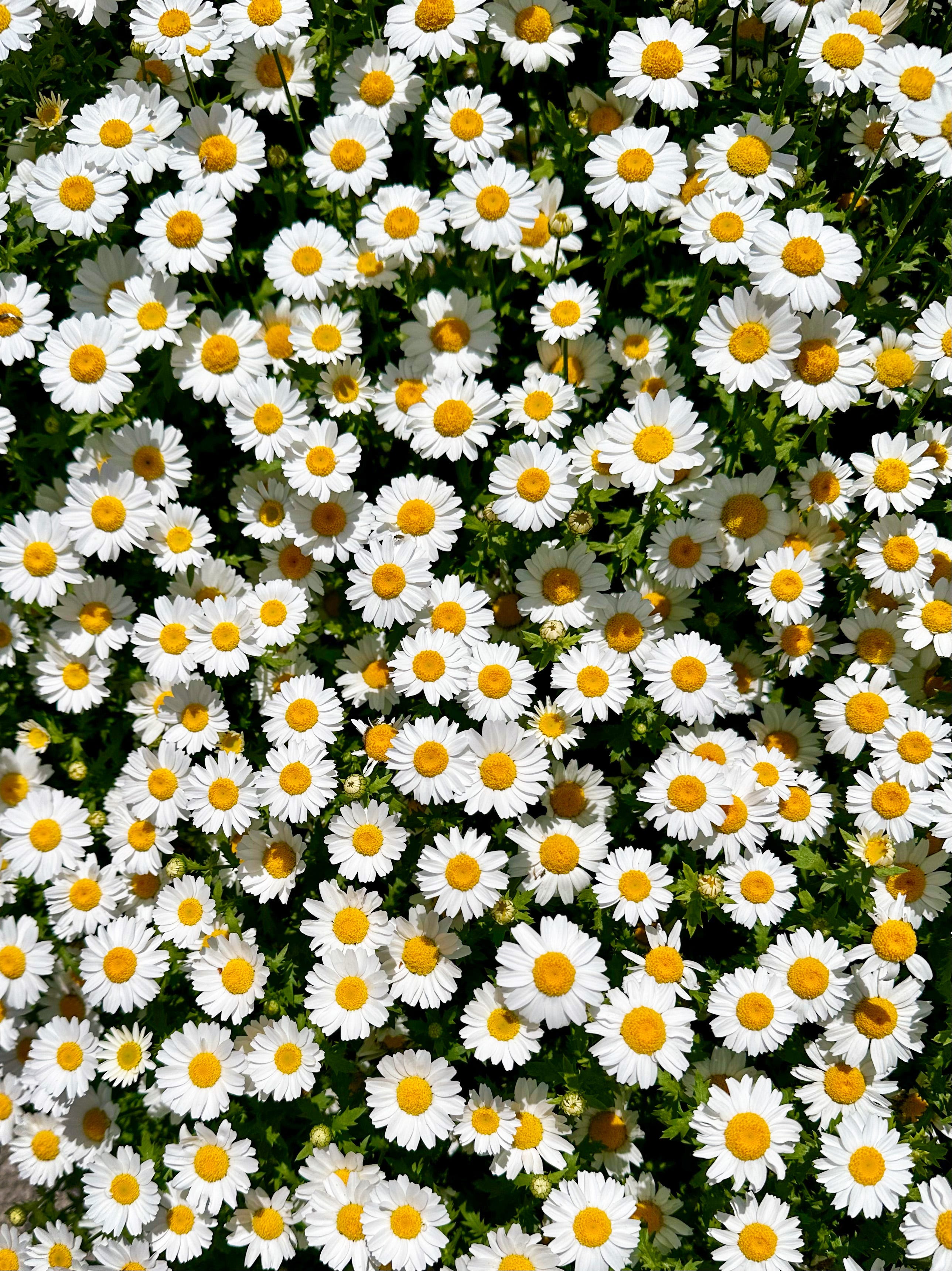
A white flower with a yellow center. A daisy. The flower I loved before she existed, and the name I chose before I knew her. The word that became her and then somehow survived her. Not my daughter—and yet, also Daisy.
🪱 COMPOST FOR THE SOUL
In this world of ours,
We walk on the roof of hell,
Gazing at flowers.
—Kobayashi Issa
🐓 BACKYARD DISPATCH
Protect and Observe
Every so often Feather Locklear decides to remind me that, despite living in a fenced enclosure and relying entirely on humans for food, water, and housing, he remains committed to the possibility of murdering me.
Earlier this week I entered the chicken run to collect eggs. I heard him before I saw him. The swoosh of feathers, the pitter-patter of feet—the unmistakable sound of a rooster running at high speed through tall grass.
The attack itself wasn’t particularly effective—after all, Feather weighs roughly as much as a throw pillow and possesses the tactical sophistication of a dropped rake. Nevertheless, he came charging across the grass with great conviction and a level of personal animosity that felt disproportionate. I responded by immediately forgetting that I outweighed him by approximately 115 pounds and making a noise that sounded wrong.
Lady sprang into action. She erupted from wherever she had been moments earlier and came tearing across the yard, barking with such urgency you’d think I was being mauled by a bear instead of annoyingly assaulted by a sentient feather duster.
There’s a fence around the chickens. There is also Lady’s electric fence.
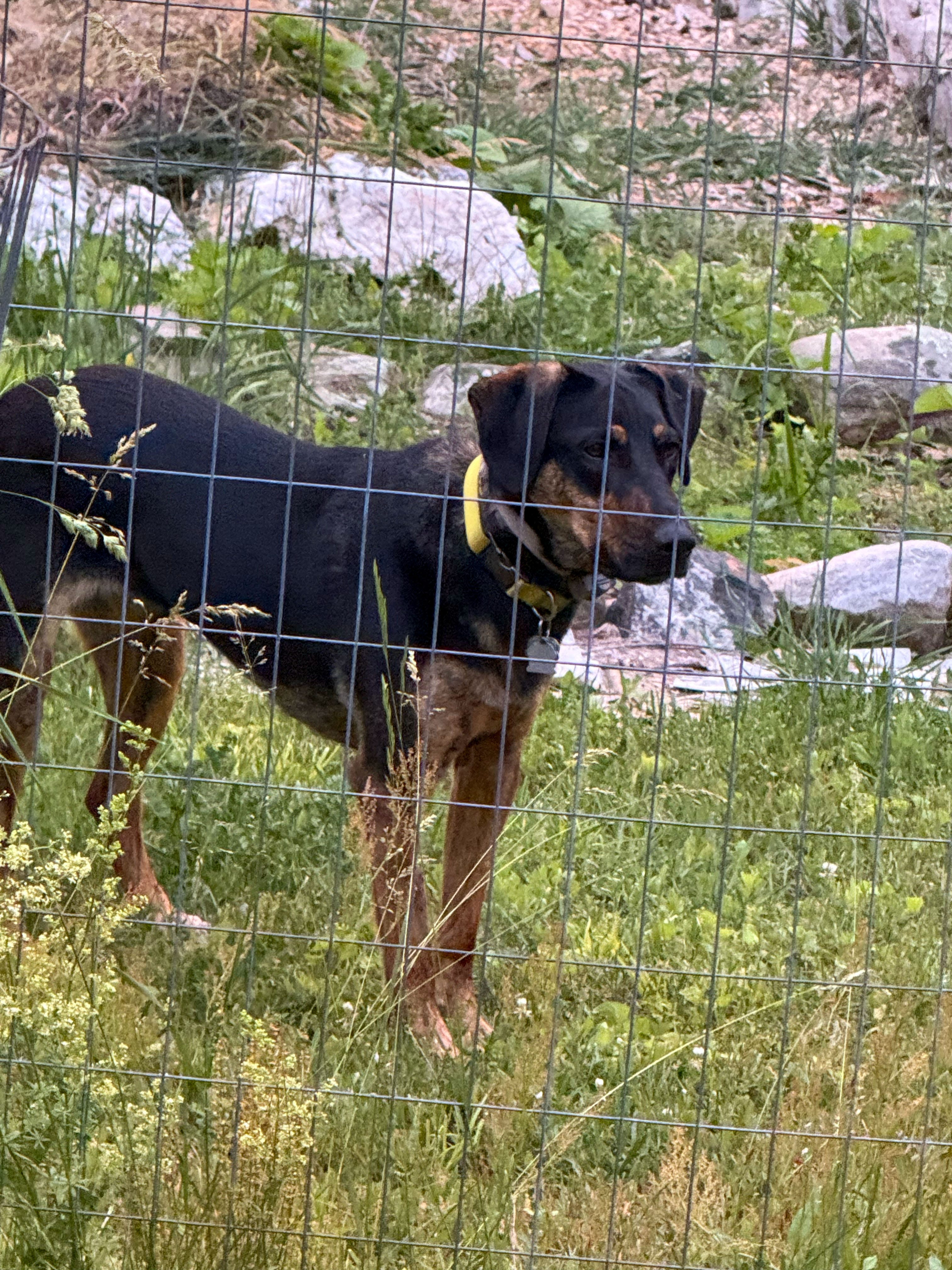
Lady raced the perimeter. Feather charged me from behind as I reached for the eggs. Lady barked. The whole thing had the energy of a hostage negotiation. I felt briefly flattered to be at the center of it.
You could see Lady genuinely wanted to help. Every lap around the fence line said: Mother, I am attempting a rescue! The problem was that she had no actual plan beyond that.
Feather had a plan. His plan was murder.
More importantly, he wasn’t remotely intimidated by seventy pounds of barking dog. Feather has lived alongside Lady long enough to understand the system.
Big barking thing comes to line.
Big barking thing stops at line.
Big barking thing continues barking.
Nothing happens.
At some point he appears to have reviewed the data. Lady thinks she’s creating a deterrent. Feather thinks she’s weather.
Disturbingly, I think he’s right.
🌹 BLOOM REPORT
Every year there is a moment when it stops looking like a collection of plants and starts looking like a place. We crossed that threshold this week.
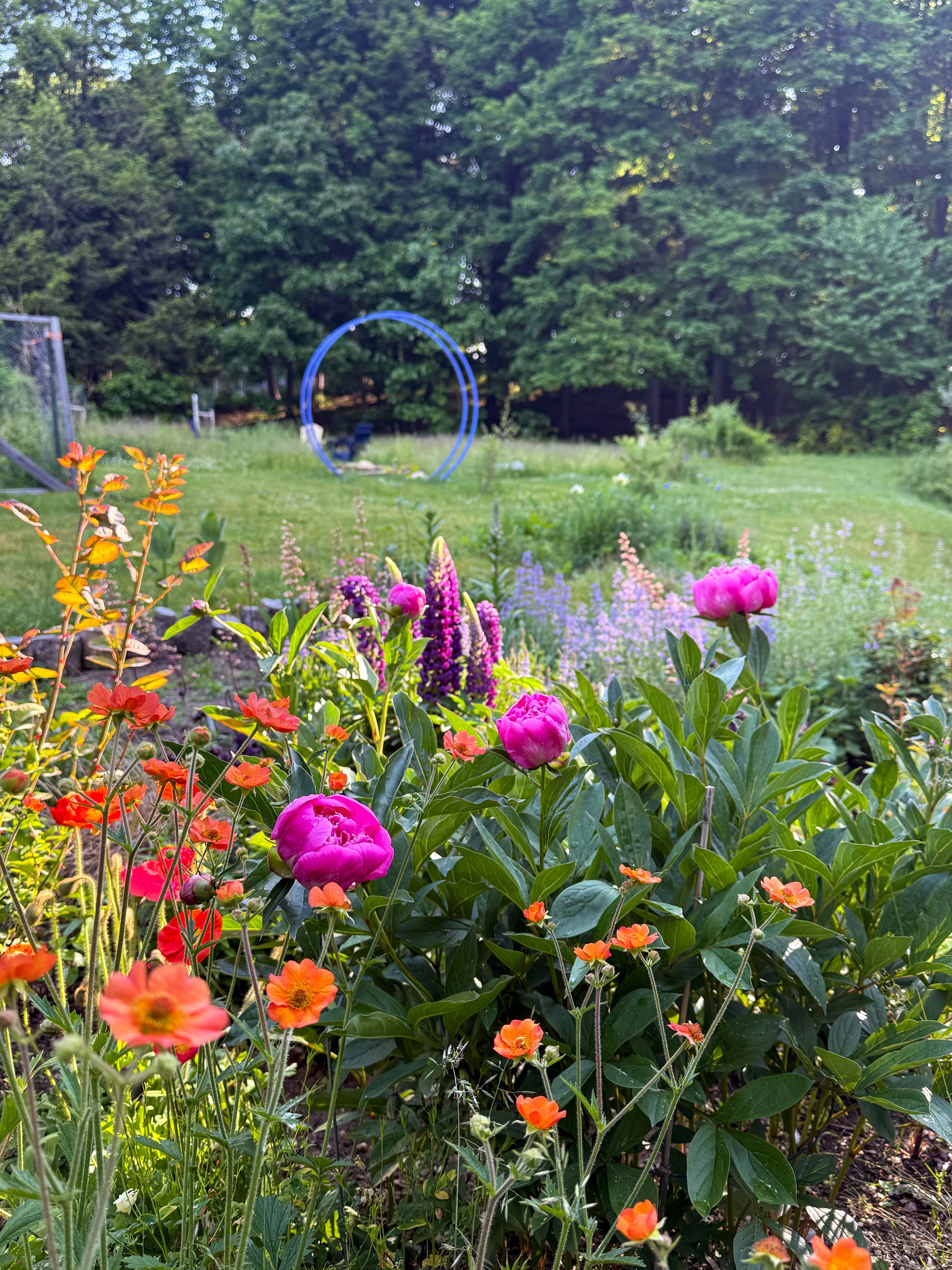
The Blue Trellis—Installed several weeks ago. Moonflowers and morning glories have officially been planted. “Crown Princess Margareta” climbing rose is next. At the moment it remains an optimistic piece of architecture.
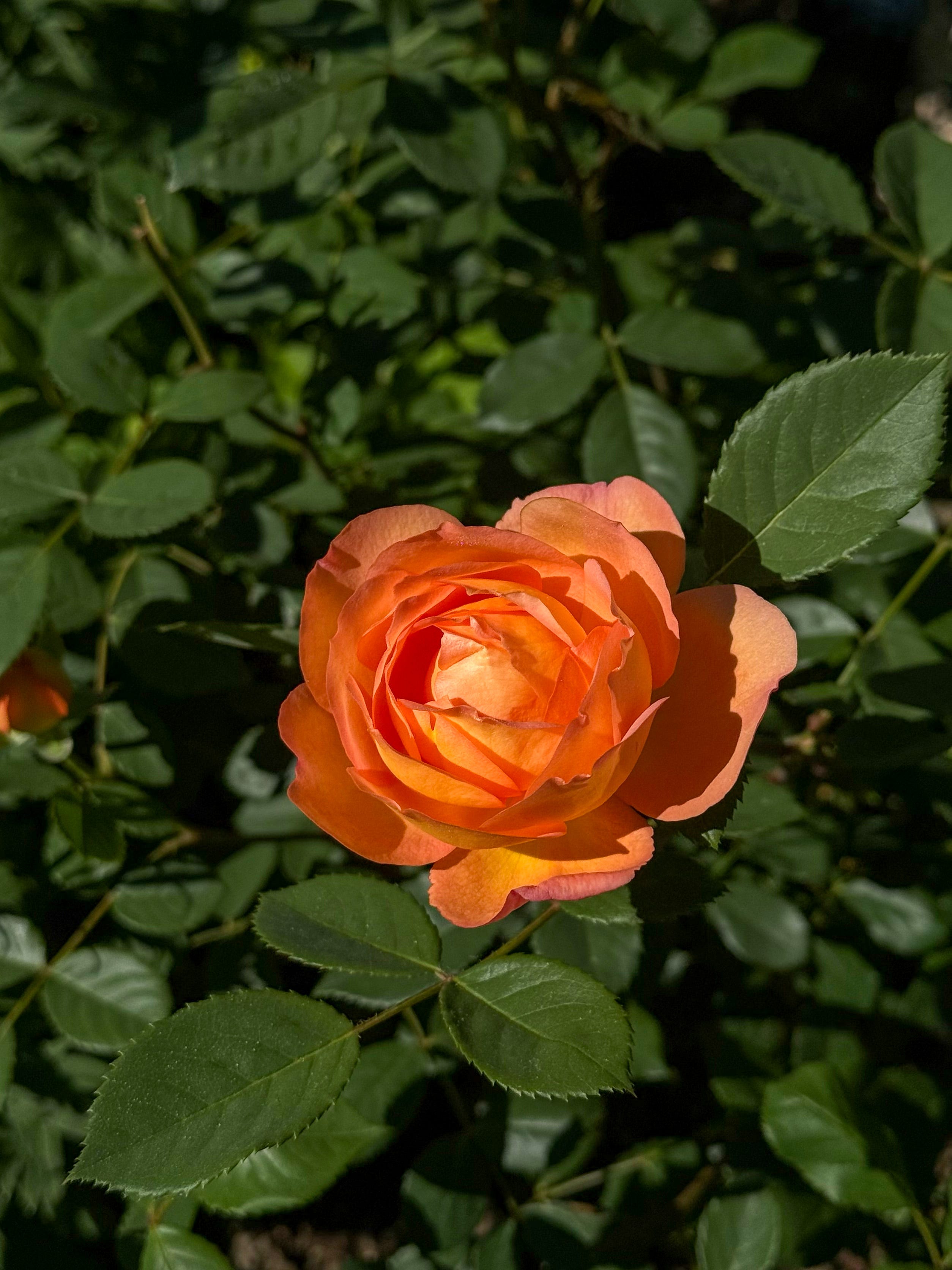
Rose 'Lady of Shalott'—The color of a sunset that refuses to end. Somewhere between apricot, coral, and the inside of a ripe peach.
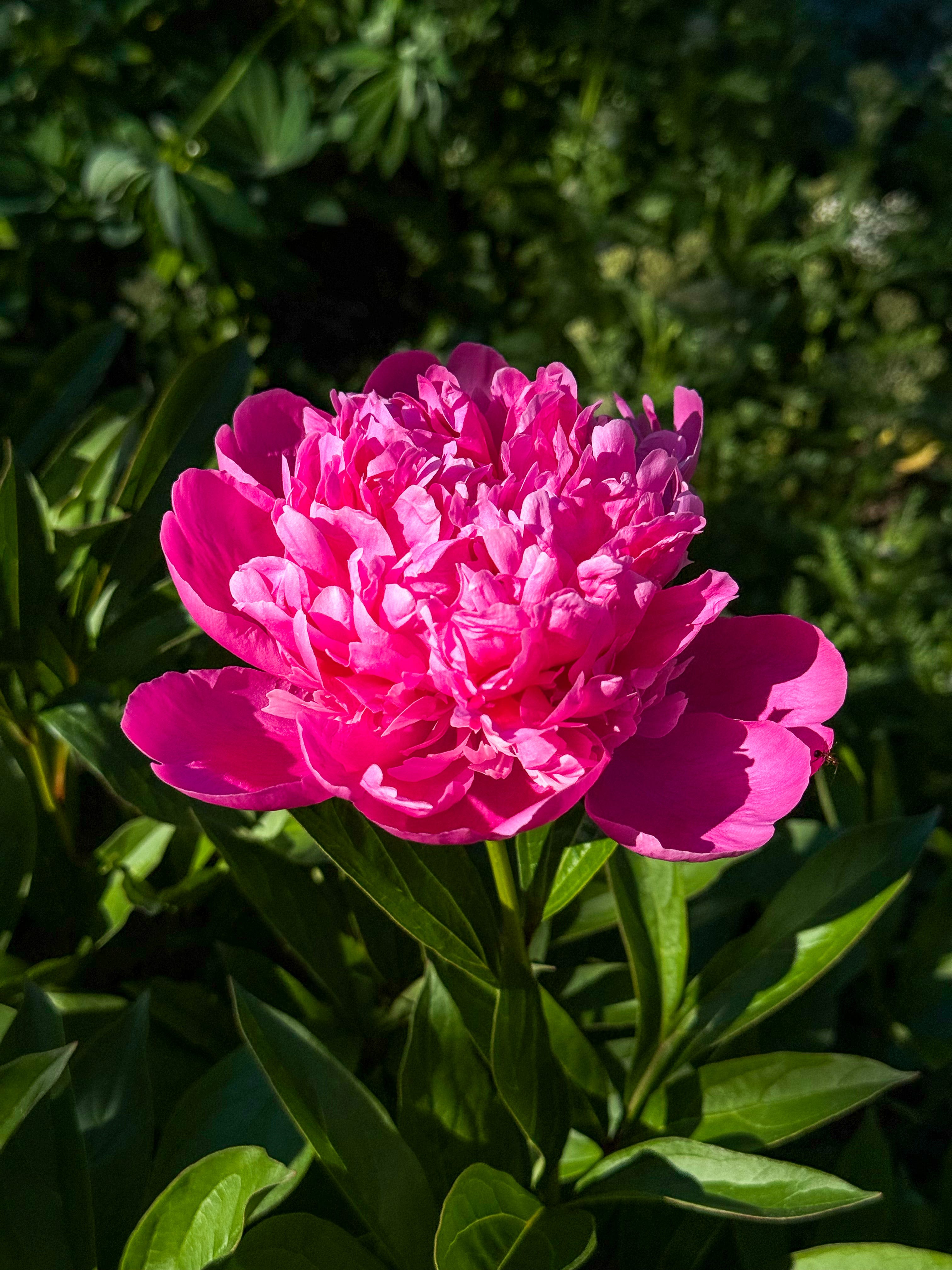
Peony—A flower with absolutely no concept of moderation.
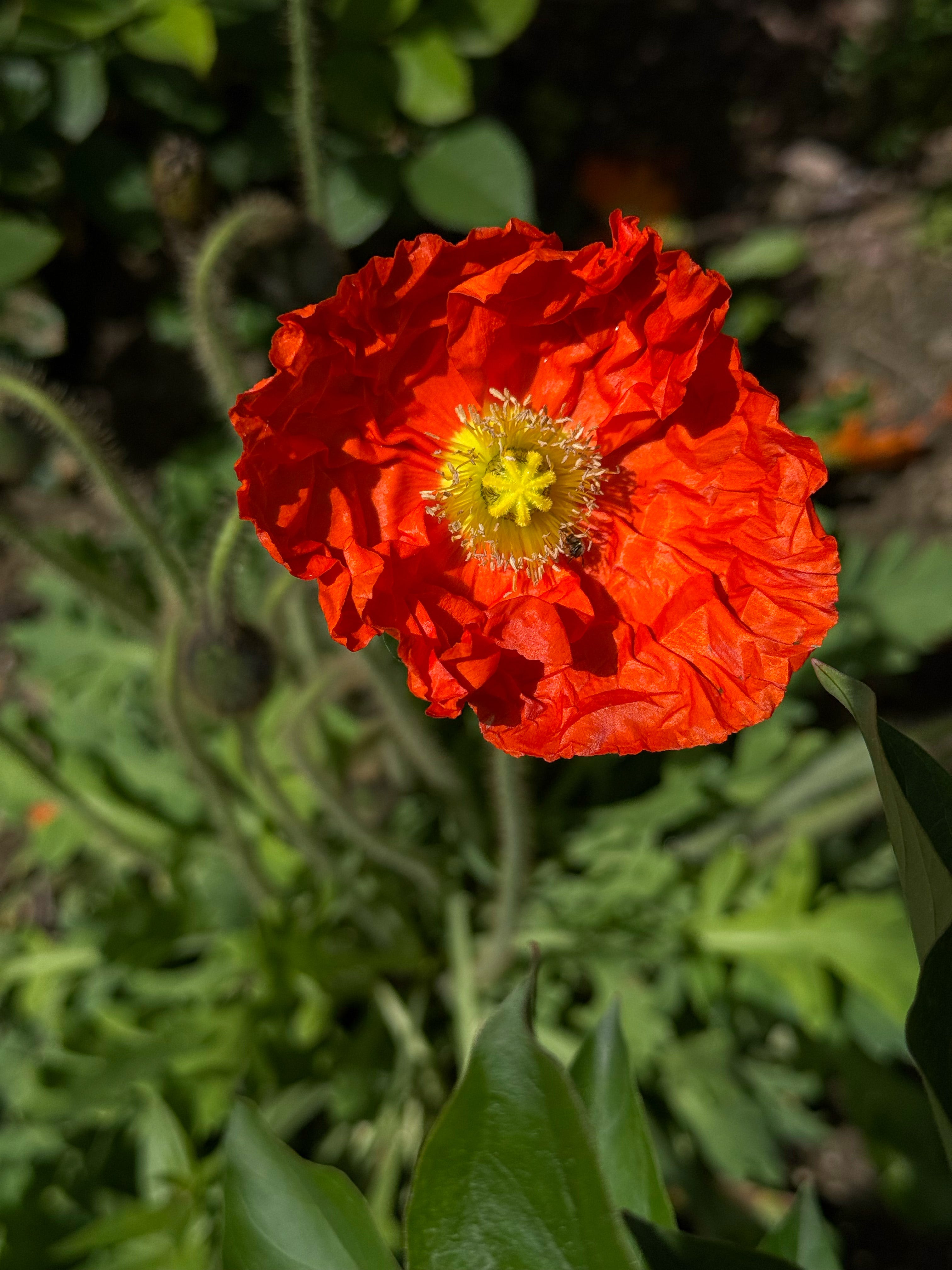
Poppy—Like a piece of crumpled tissue paper that caught fire.
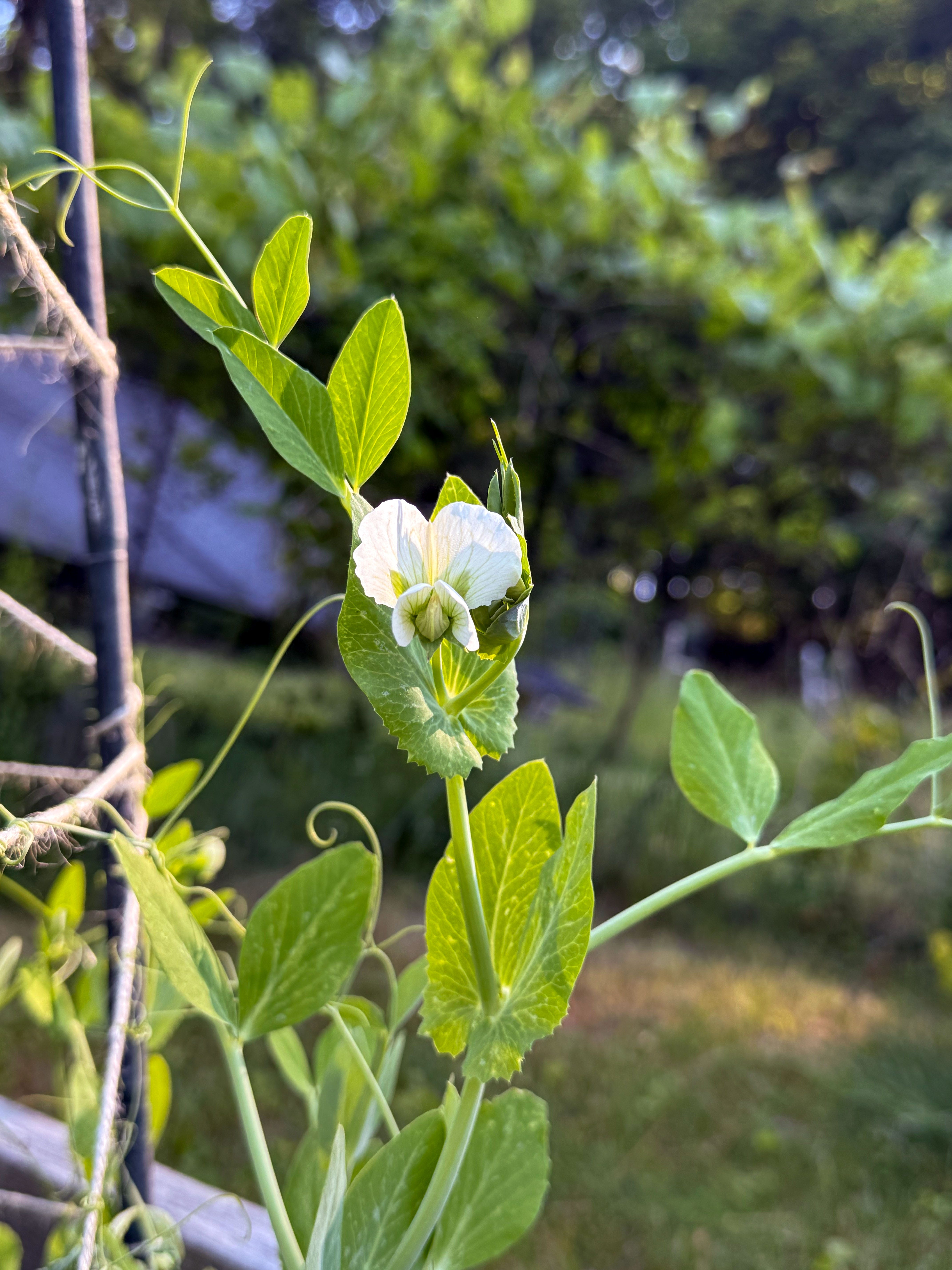
Pea blossom—The vegetable garden's reminder that food can be beautiful long before it becomes useful.
🪰 PEST SUPPORTING ACTOR GOES TO…
Buzzness Development
A repeat nominee! Fresh off last week’s breakout role in Nest on the Front Door, this week, the Bald-Faced Hornet Queen returns in the highly anticipated sequel, Nest on the Side of the House.
First of all, “bald-faced hornet” is a lie—a bald-faced one, at that. It’s not even a hornet. It’s actually a yellowjacket, which, after a brief and confusing period of research, I learned is in the wasp family.
Last week she began constructing a nest directly on my front door. Not under an eave, not on the door frame, not in a tree. On the actual door—the one part of the house specifically designed to be touched by humans.


The door nest (exhibit A) was strategically removed by Not Me (i.e. Paul). At this stage it consisted of nothing but the little swirly top that connected it to the door and a fake hornet’s wildly ambitious business plan.
For reasons I cannot adequately explain, I then placed the partially completed nest on my kitchen table and spent the next two hours considering whether it might make a charming curio. Maybe I’d put it in the guest bathroom next to seashells and bird nests.
“What’s that?” visitors would ask.
“The early stages of a nest built by a highly aggressive stinging insect,” I’d reply.
Anyway, I eventually threw it away.
Now she’s back, and apparently she interpreted the removal not as a rejection but as feedback.
The new design (exhibit B) features a sort of papery funnel. Whether it is intended for housing, worship, or the small-batch manufacture of additional fake hornets remains unclear. What is clear is that she continues to view my home as a promising development opportunity.
At least someone does.
Special thanks to My Paint Job for its ongoing commitment to peeling dramatically in every photograph.
🎭 A BIT MUCH
For the debut of this very important new section, I present the lupine, which has mistaken ordinary plant senescence for a full emotional collapse.
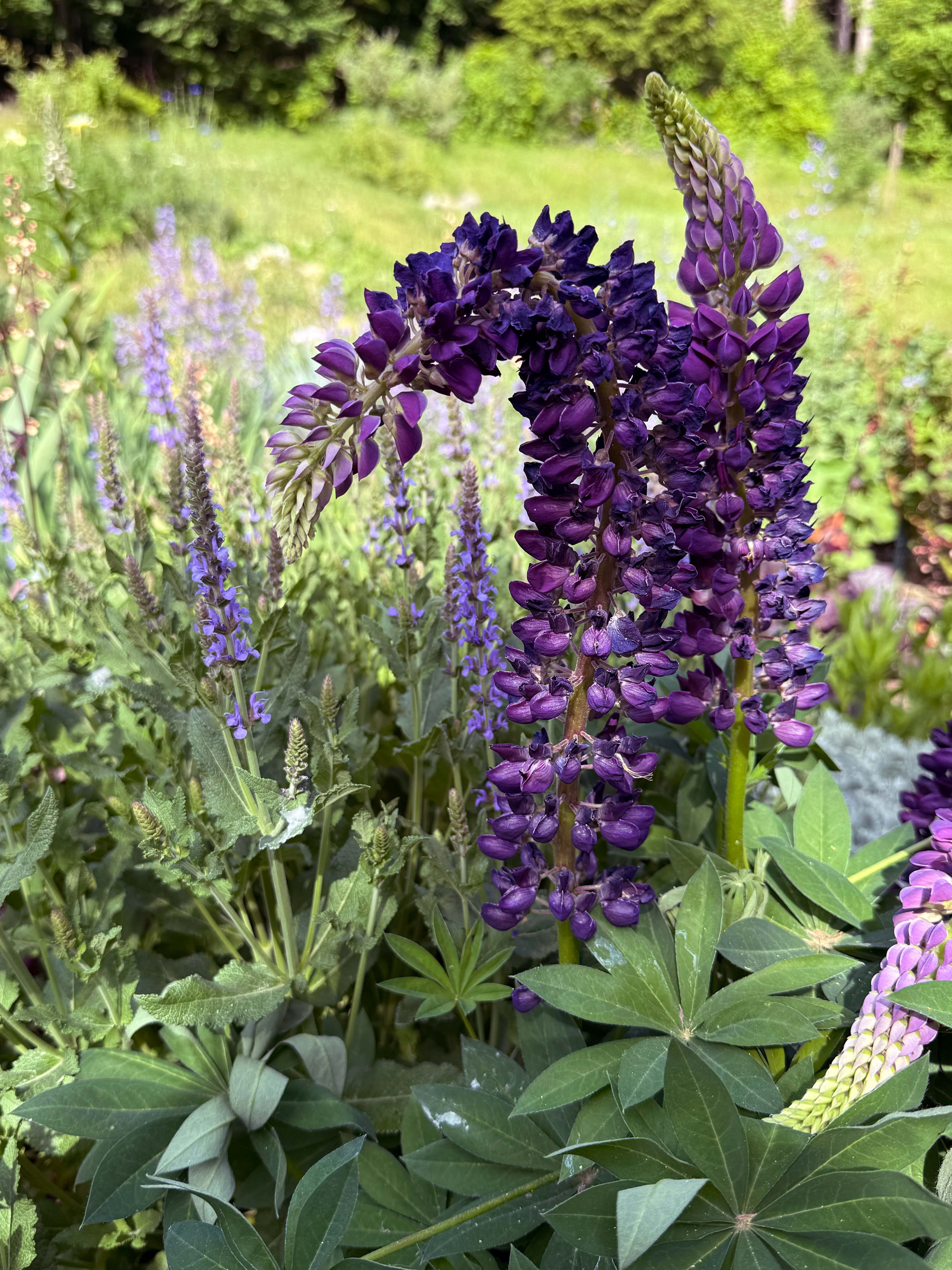
Someone get this lupine a fainting couch and smelling salts. We’ve reached the third act.
🎧 BEET DROPS
Peter Gabriel—"Games Without Frontiers"
Somewhere between the rooster, the hornet queen, and a name that keeps turning up where I least expect it, I've begun to suspect that boundaries are mostly a suggestion.
Stay dirty,
x bex
Gorgeous. You and your pieces are otherworldly...and at once as grounded as the dirt under your nails. I look forward to every piece you write.
I’m looking forward to the moment where I not only feel—but also announce to anyone in earshot—that I am feeling juicy.