
Compost Logic
Some anniversaries are lived with, not through.

September in the garden feels different this year. Last year, I was running on manic, dissociative energy from losing Daisy only months before—I ripped out weeds, turned soil, and planted an entire new bed as if I could outpace grief with compost. I built, built, built. If my hands were moving, maybe my head wouldn’t cave in. I wasn’t ready. I moved through the days like someone possessed, deranged—the garden was my altar, my shield, and my obsession.
This year, the pace has slackened, even though I’m more invested, more present. The beds are blooming, but quieter. The cosmos sway their greetings, the nigella turns from bloom to husk overnight. Even the sunflowers feel less like cheerleaders and more like ushers, slowly bowing the season along. In that quiet, I can’t help but hear one date calling back to me.
September 2. It’s no longer just another day at the edge of summer. It’s the day the doctors first cut into Daisy’s skull to remove a mass found just days before.
The day the hospital air pressed heavy and metallic against my lungs.
The day the antiseptic-laced tile floor held me, collapsed, after hearing the tumor was malignant.
The day the fluorescent lights began their unkind glare that would last seven months.
The day my life began to be measured by hospital monitor beeps, and a panel of doctors became my social circle.
The day she stopped speaking.1
100 miles away, the garden must have been exhaling its late-summer breath. At dusk, the whole place lets out a sigh—soft, steady, inevitable—the way I do now when I let myself remember Daisy openly. Last year, I couldn’t. I had been holding my breath for a year.
I wasn’t there for that September turning in the garden—I wasn’t at Daisy’s bedside either. I was suspended above myself, watching, my body in the chair, my heart nowhere reachable. It felt like being a cicada shell clinging to a tree: hollowed—the real, feeling part of me already gone. Present, intact, even recognizable, but emptied.
September 2 is the marker of when my world went underground. Just like gardens down-regulate and conserve, maybe that’s what I was doing, too. Saving myself by leaving, at least in part. I didn’t know it then, but even in that hollow state, something of me was storing itself away, like bulbs tucking underground, waiting for another season. It was all too hard to watch—seven months of nightmare. I can hardly bear time alone with my memories. The same scar that ran through my daughter’s scalp runs through my days, through the garden.
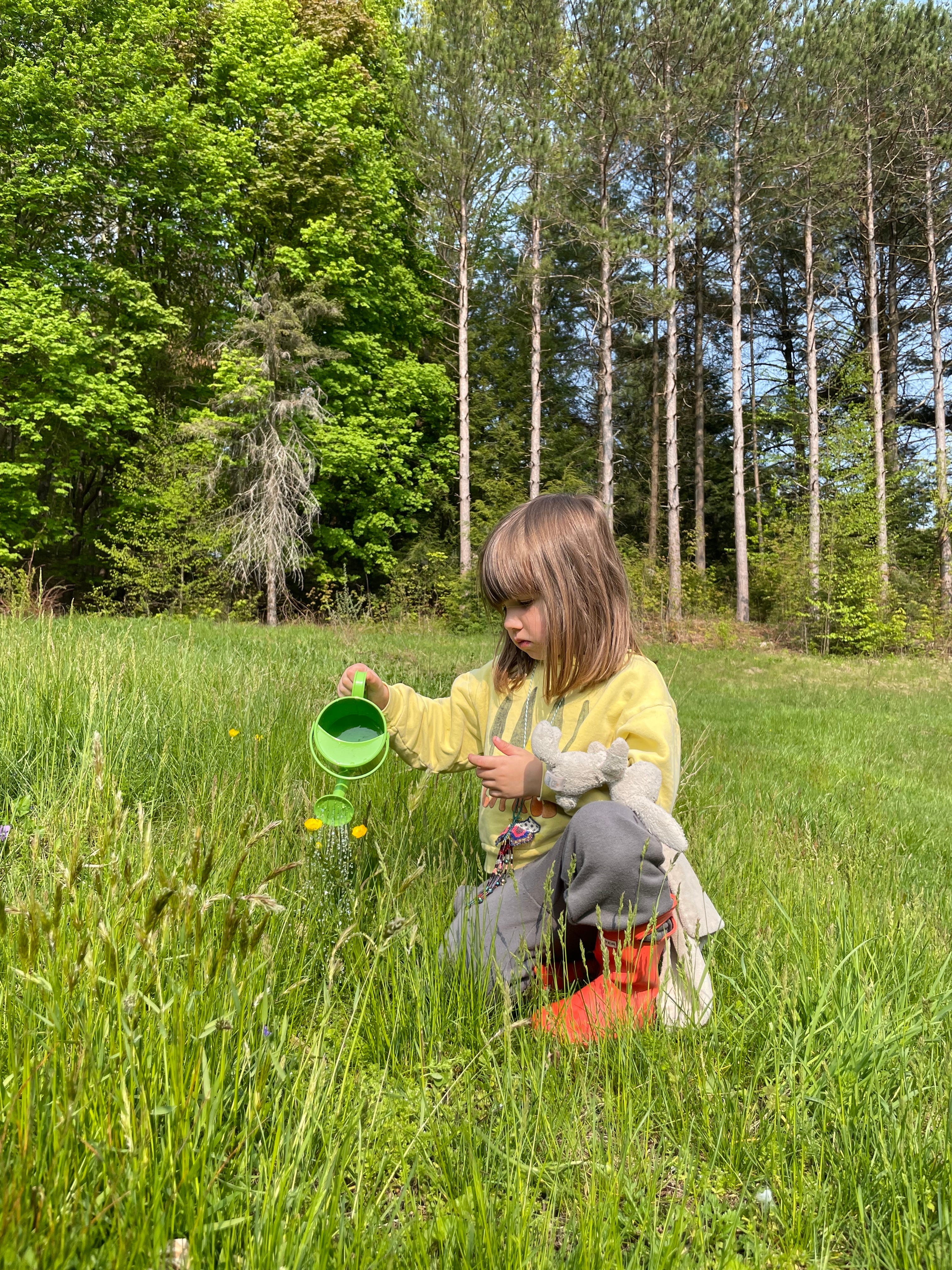
Two years ago today we walked into the hospital, and I learned what it means for a body to truly fight for itself. Now, the garden teaches me again.
I’m not hovering anymore. Most days, I’m here. And that means the grief arrives without a buffer—except for Xanax, my tiny chemical floatie in a tide that still pulls me under.2 The quiet of the garden now beckons me inward. Where last year I was manic, now I am porous. Last year I planted as a distraction, driven by an insatiable need to create in the wake of unspeakable loss. This year, I’m taking my time.
I bend low and watch the zinnias dry to paper, their showy costumes fading to something brittle and translucent. I stand still long enough to watch the sunflowers rotate their beaming faces as light arcs across the sky, tracking the sun as the days grow shorter. I see the stalks of goldenrod bowing under their own weight, the first asters pushing purply blue against green. The earth is preparing to hold what it cannot show—roots drawing down, seeds waiting for dark and cold before they can ever dream of opening again.
The garden, like grief, keeps its own time. September brings endings—petals falling, vines collapsing—but also the rattle of seeds. A seed is both an ending and a promise, grief and hope jam-packed into the same casing. If that isn’t compost logic, I don’t know what is. Rot and possibility in the same breath: what looks like ruin is slowly becoming nourishment for something else. I try to hold onto that, even though it’s not enough.
Because the truth is, nothing is enough.
Not the garden.
Not the sunsets.
Not the Xanax.
Not the careful arranging of words or poems about garden pests.3
Nothing.
Daisy is written into me. She is not an annual, here-and-gone. She is perennial—rooted, returning, insistent. Not gone, but carried by the season itself. Each year when the air changes, I return to her—nursing as a baby, dancing as a toddler, playing soccer as a 3 year-old, lying tiny in her hospital bed as a 4 year-old—not because I choose to, but because seasons drag me back by the collar.
The flowers bloom whether I’m ready or not. The sun lowers whether I consent or not. And I follow, slower now, but open, trying to keep faith with the seeds and trying to find some peace with the child I lost.
Still rooted, even when I’d rather float.
🪱 COMPOST FOR THE SOUL
Grief is a house where the chairs have forgotten how to hold us, the mirrors how to reflect us, the walls how to contain us.
—Ocean Vuong
🐓 BACKYARD DISPATCH
Paw and Order
Meet Lady: eleven months, seventy pounds, still growing.
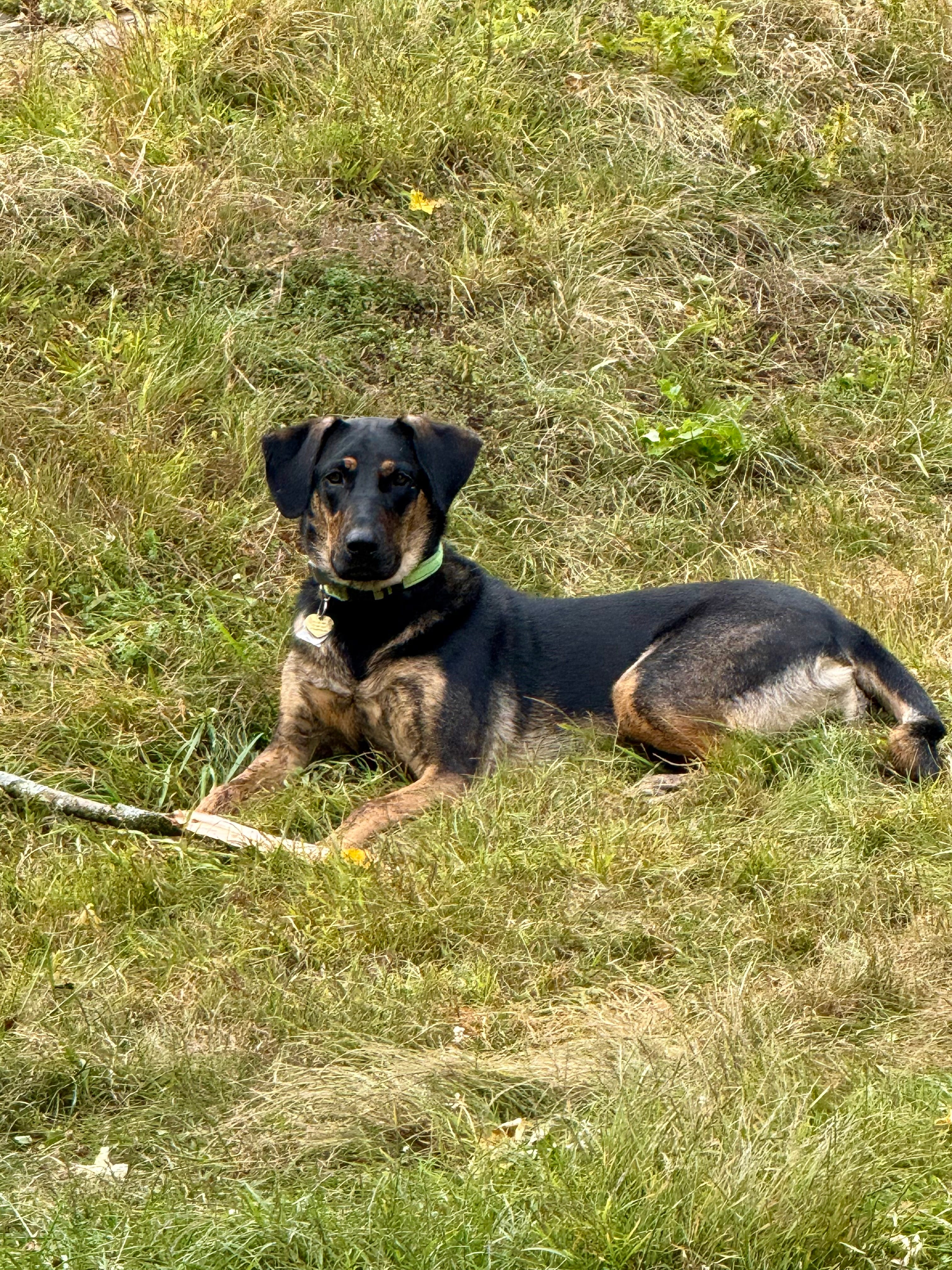
She’s a puppy the size of a small horse, equally prone to barking at me in the shower and refusing to walk through a half-open door. She’s never been to the dentist or filed her taxes, but she’s working on it.
What she has mastered is keeping Gerald away.
Flash back to late June: strawberries ripe, peas climbing, everything sticky and overgrown. Enter Gerald the groundhog. He left half-eaten crowns in the strawberry patch and cruel green stubs where peas had been. The case was open, but I had no leads.
Then one afternoon Lady started barking like a lunatic. I came outside to see a slovenly dick of a groundhog waddling off. Sure enough, there was a brand-new burrow in the middle of my overgrown “pollinator patch.” Gerald had moved in.
Naturally, I tried to fix it myself. Using the tools at hand (literally whatever was within arm’s reach), I placed an old galvanized watering can into his tunnel and stomped it down.
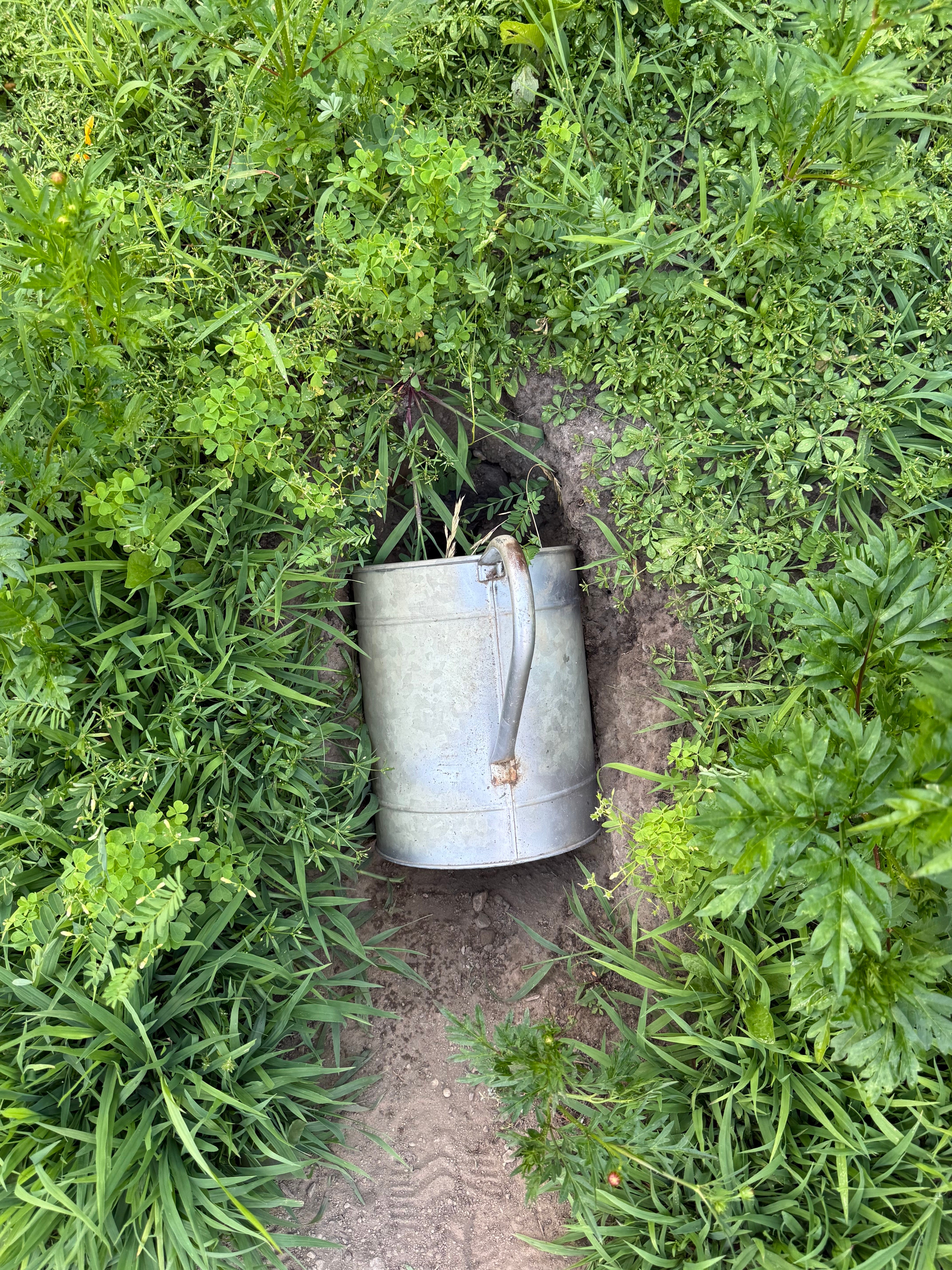
Hole sealed, case closed—or so I thought. Gerald simply dug a second hole. Apparently groundhogs can do that. I gave up, sulked, and left the garden gate open in defeat.
But Lady didn’t.
Since then she’s been patrolling daily, nose deep in last winter’s chicken-coop smells, hound instincts firing.4 And here’s the thing: the past few weeks, my tomatoes have ripened into perfect, round reds—not the hollowed-out horrors Gerald usually leaves behind.
So where’s Gerald? Maybe he’s been scared off by Lady’s smell—can’t blame him there. Maybe he found greener pastures. Or maybe he’s nothing but a chalk outline on Great Barrington Road.
Either way: case closed. We love you, Lady!
🏺 VASED AND CONFUSED
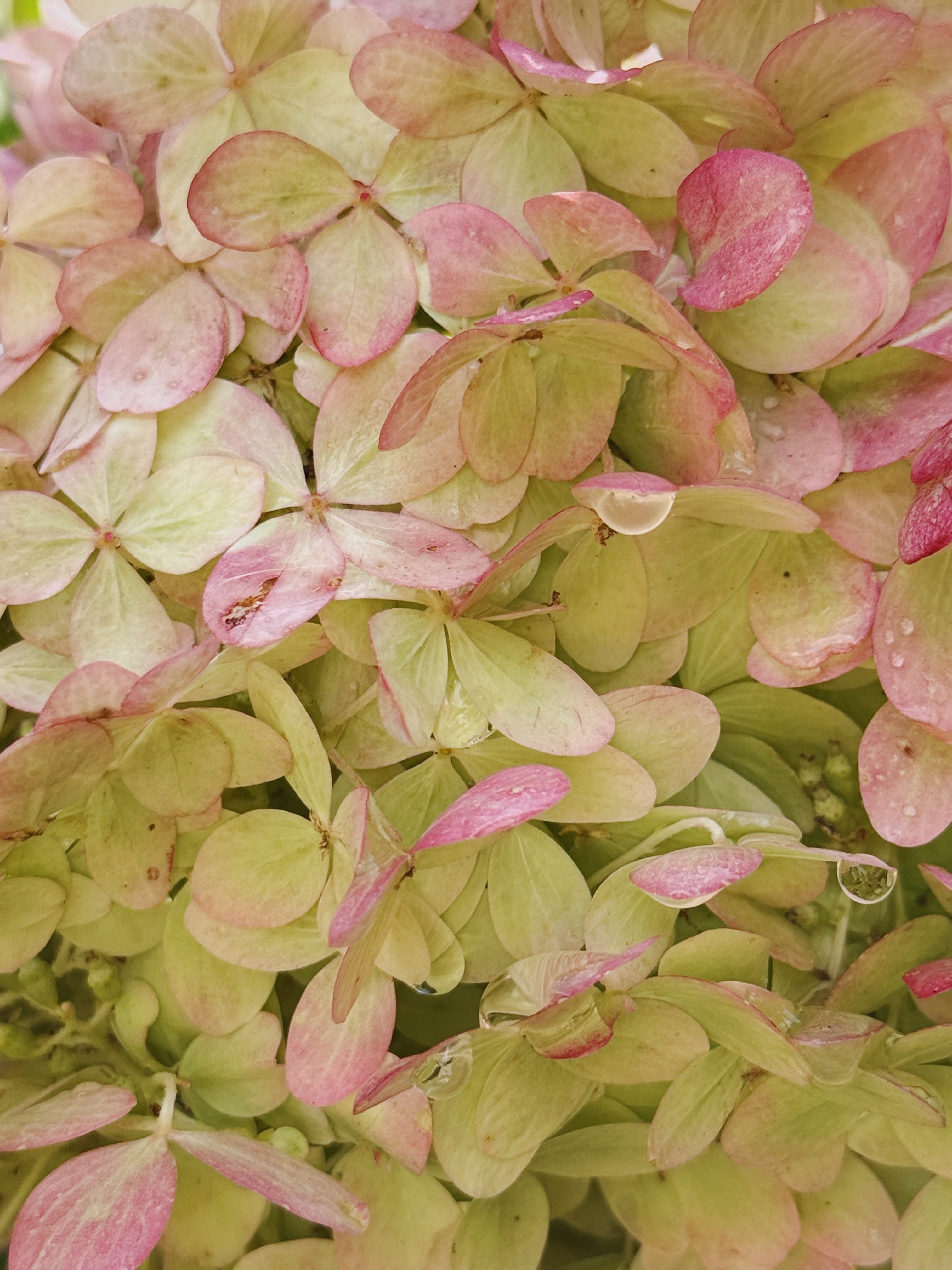
Hardly “arrangements,” more like whoever showed up got a glass of water. Still, they clean up well—humble, a little chaotic, but charming enough to get away with it.5


🦋 LEPIDOPTERA? I HARDLY KNOW HER
Eat, Pray, Moth
I met a new species!
Like most people, I plant milkweed to woo monarchs, but it turns out there’s another caterpillar at this party: the milkweed tussock moth caterpillar (aka milkweed tiger). These fuzzy orange-white-black guys look like a Halloween party conga line on acid, skeletonizing a milkweed plant in hours. 😱
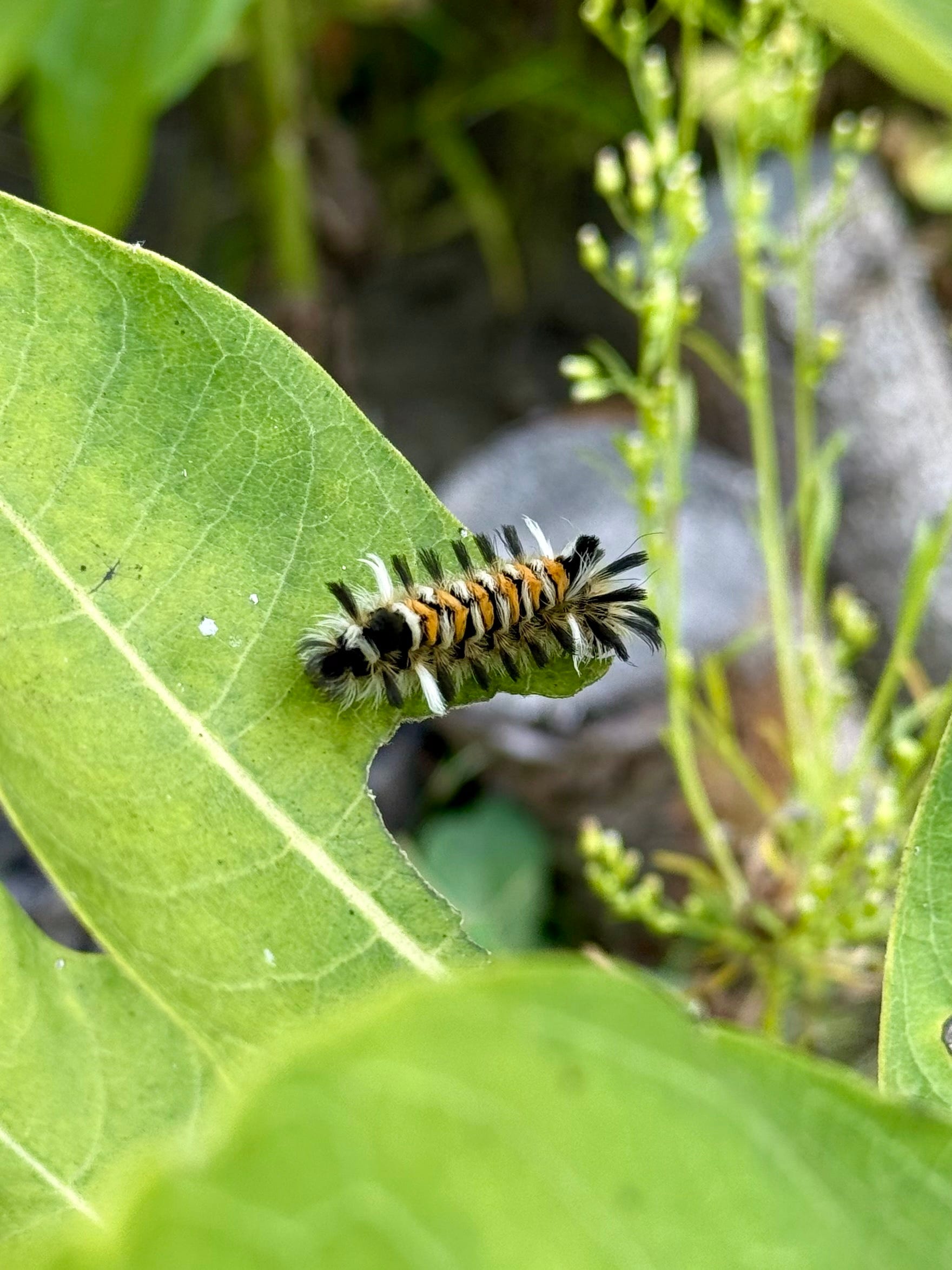
But here’s the thing: they’re not villains, just opportunists! Monarch caterpillars prefer young, tender milkweed in early summer. Tussock moth caterpillars hatch later and mop up the “leftovers” and move on. Milkweed has evolved with them, so the plant usually rebounds.
The bad news? They don’t Gregor Samsa their way into monarchs.
The good news? They turn into soft gray moths with understated beauty, still part of the pollinator scene.
Hello, fellow travelers!
🤯 WHAT IF I’M THE INVASIVE SPECIES?
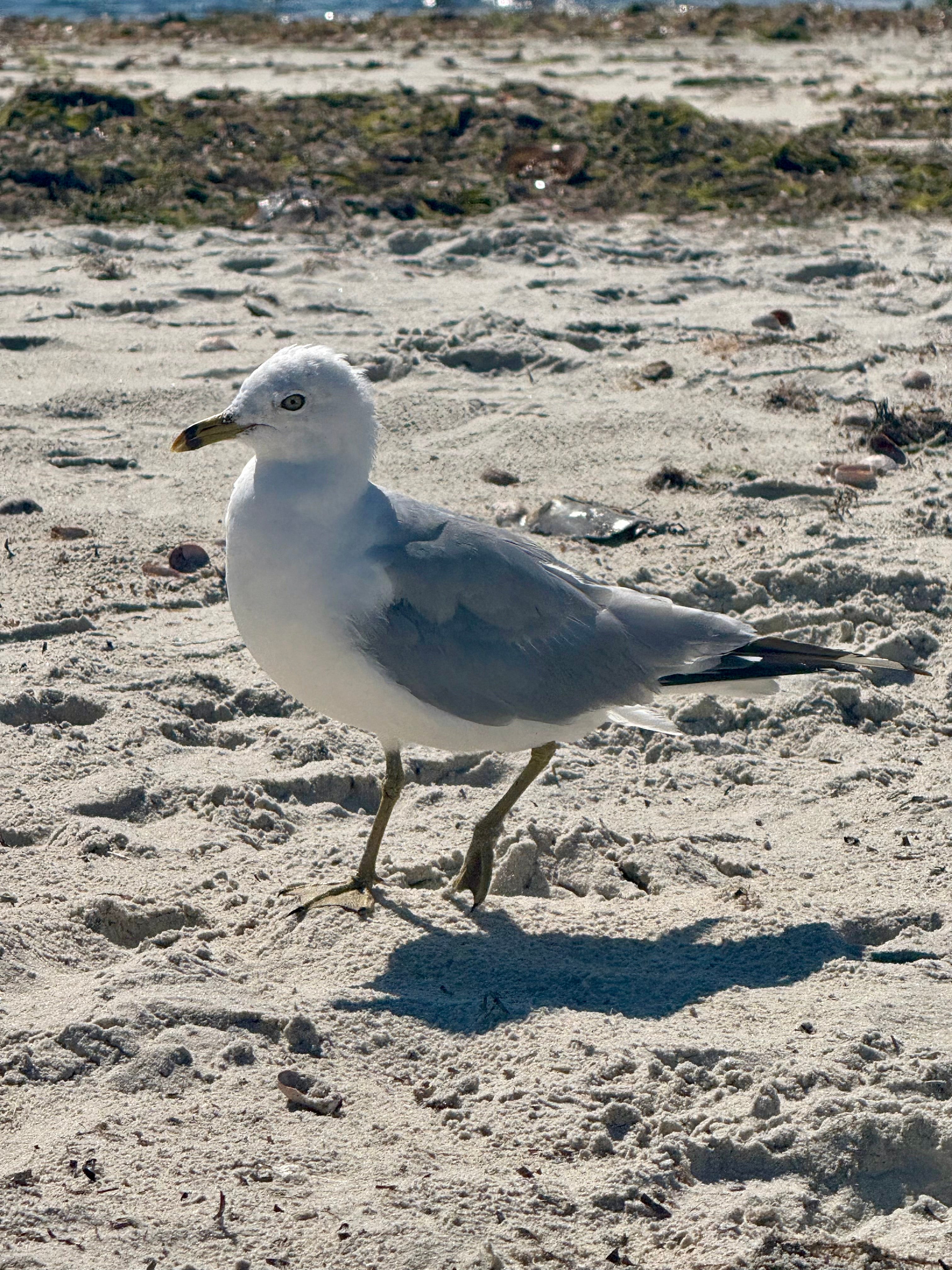
Lord of the Wings: Ode to the Seagull I Met on My Birthday
You cut the sky with ragged grace,
a holy thief with a mischievous face.
Your feathers flashed, the tide rolled in,
I swore I felt my heart begin.
The beach was crowded, loud, and bright,
yet you were scripture in the light—
a hymn disguised as shriek and caw,
a winged marauder, beach-town law.
I loved you then, absurd, profound,
your shadow stretching on the ground.
Not mine to keep, not mine to tame,
but oh, you knew me just the same.
You circled chips, you eyed my bread,
you mocked the couples newlywed.
Romeo dressed in salt and squall,
the strangest suitor of them all.
Forty now, and this is fate?
Not wine, not cake, but a feathered mate.
The waves sang older, freer, more,
and you arrived, my troubadour.
The surf was beating, bright and strange—
the world transfigured, sweetly changed.
I met your eye—was it a dare?
A birthday tryst, a seaside prayer.
So take my wish on borrowed air,
my MDMA-lit, salt-soaked stare.
A gull, a girl, the sea between—
forever caught in what could have been.
Stay dirty,
x bex
The one true word she said, a few months after surgery, was “momma.”
Big Pharma: 1, Grief: still undefeated.
My Ode to a Wasp still slaps, though.
Ask me about my dog’s DNA report.
Just like me!
After I finished reading, I realized I'd had my hand pressed firmly on my heart the whole time. So beautiful.
Also: Sup, Seagull. That swagger.
Beautiful as always